West Virginia Has What Hyperscalers Crave
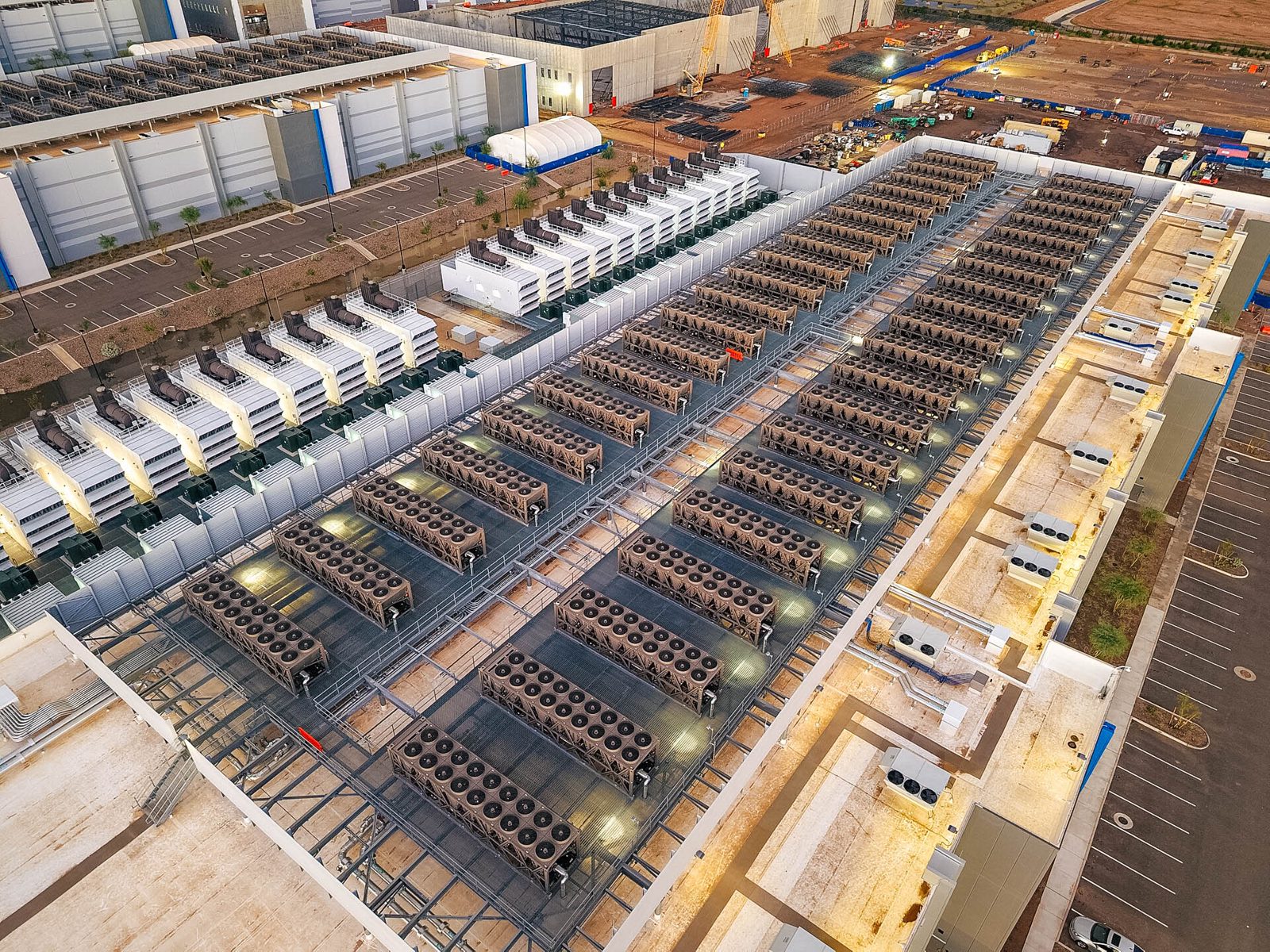
If you’re a local government in West Virginia, Big Tech can essentially do whatever it wants with you. That’s actual state law. It’s called the Power Generation and Consumption Act, or West Virginia House Bill 2014. Its headline effect is to make it illegal for cities and counties to enforce local zoning, noise, light-pollution, or land-use rules that might impact data centers or the power plants that supply them.
Governor Patrick Morrisey will tell you that the bill was hand-crafted for West Virginia, that data center developers had nothing to do with it. Well, maybe they chatted a bit with state legislators after the drafting, but that’s it. Can’t help that.
The reason that Morrisey will tell you this is because of a peculiar incident that occurred this summer at a city council meeting in Bedford, NC. A resident named Ted McGavran spoke at that meeting. It turns out that he’s an electrical engineer working on a new microgrid project in West Virginia, near the Davis landfill. Could generate enough electricity to power 100 data centers, in fact.
In McGavran’s telling, the data center industry steamrolled West Virginia. “We were the guys that basically wrote the bill and got it through the legislature in 2024 and early ‘25,” he told the council. “That gave us the opportunity to set out the rules for what’s called a microgrid. It’s really macrogrid as big as it’s going to be.” A microgrid, misnomer aside, is a self-contained electrical grid popular with hyperscalers because it doesn’t draw on public power supplies.
McGavran sees what’s happening in West Virginia as a cautionary tale for his own North Carolina hometown. This is especially true around local noise ordinances, which are null under HB 2014. “I mean we’ve got a small town here [in Bedford],” he said, “a small compact town and so a diesel generator makes noise. I think we need to be very strict on that aspect.” Backup diesel generators are often tested in the middle of the night, McGavran explained. “They will need a noise ordinance.”
I’ve been worried about how this company has handled itself from the beginning
Governor Morrisey, a Republican whose prior career largely revolved around suing the EPA on behalf of dirty energy companies, seems to have been caught flat footed by McGavran’s comments, and perhaps the data center backlash itself. “This so called representative is fabricating this story—he should be ashamed of himself,” Morrisey wrote on X in July. “No respectable company would allow someone who represents them to mislead the media and the public like this. I’ve been worried about how this company has handled itself from the beginning.”
“They need to do much better,” he wrote. “Shame on them.”
The company in question is called Fundamental Data, which seems to have been conjured into being solely to develop the new WV microgrid project. It’s not clear that McGavran is even a Fundamental Data employee. His LinkedIn and Blue Book pages indicate he runs his own shop. A freelancer then.
In any case, Fundamental Data released a statement denying having anything to do with HB 2014: “Fundamental Data played no role in drafting the legislation.”
That’s almost certainly true. It’s not even clear to what extent Fundamental Data, a Virginia-based company with a shell of a website, existed while the bill was being drafted. The “we” McGavran refers to likely just means “the industry.” Lobbyists, energy exec buddies, donors. The usual. Malign influence takes a wide variety of forms, most of which are insidious and hide behind plausible deniability.
Beyond HB 2014, the state of West Virginia is running protection for data center developers in other ways. One of those is secrecy. A rule advanced earlier this year in the state legislature, and later codified into law, ensures that “All Letters of Intent seeking certification of a microgrid district and all Petitions seeking certification of a High Impact Data Center shall be deemed confidential.” In other words, don’t even ask about your local data center proposal.
It’s all an echo of the policies and would-be policies of the Trump administration and its billionaire benefactors in Big Tech. This included a provision in the One Big Beautiful Bill Act that would have put a 10-year moratorium on all manner of state and local data center regulations, including zoning restrictions. It was ultimately stripped from the final bill, but it shows where MAGA’s head is at on the issue.
Last week, the Environmental Protection Agency unveiled a plan that would eliminate federal public comment requirements for data center and other industrial projects. The result would be “an unlevel playing field where citizens in one state are kept completely in the dark about new data centers and heavy industrial emissions in their backyards, while neighboring states maintain oversight,” Mike Koerber, a former deputy director of EPA’s air quality office, told the AP.
At both the West Virginia and the federal levels, the reason for all of this is to make it as easy as possible to build data centers at mammoth scales. No friction whatsoever. Massive tax breaks. Rubber-stamped permits. Just zero self-respect here.
It’s achieving the desired effect, of course. Handouts work. What’s happening in Davis is only a part of the boom. This past Thursday, the Office of the West Virginia Governor announced another $80 billion in data center investment in the state for two additional hyperscale projects, both in Mason County on the Ohio River. WV Public Broadcasting puts the current count of state-certified major new data center projects in the state at six, with more proposed.
-- michael byrne
Electrolytes?
The Morrisey family made money off of pharmaceuticals, too. Rotten to the core
reply on bluesky