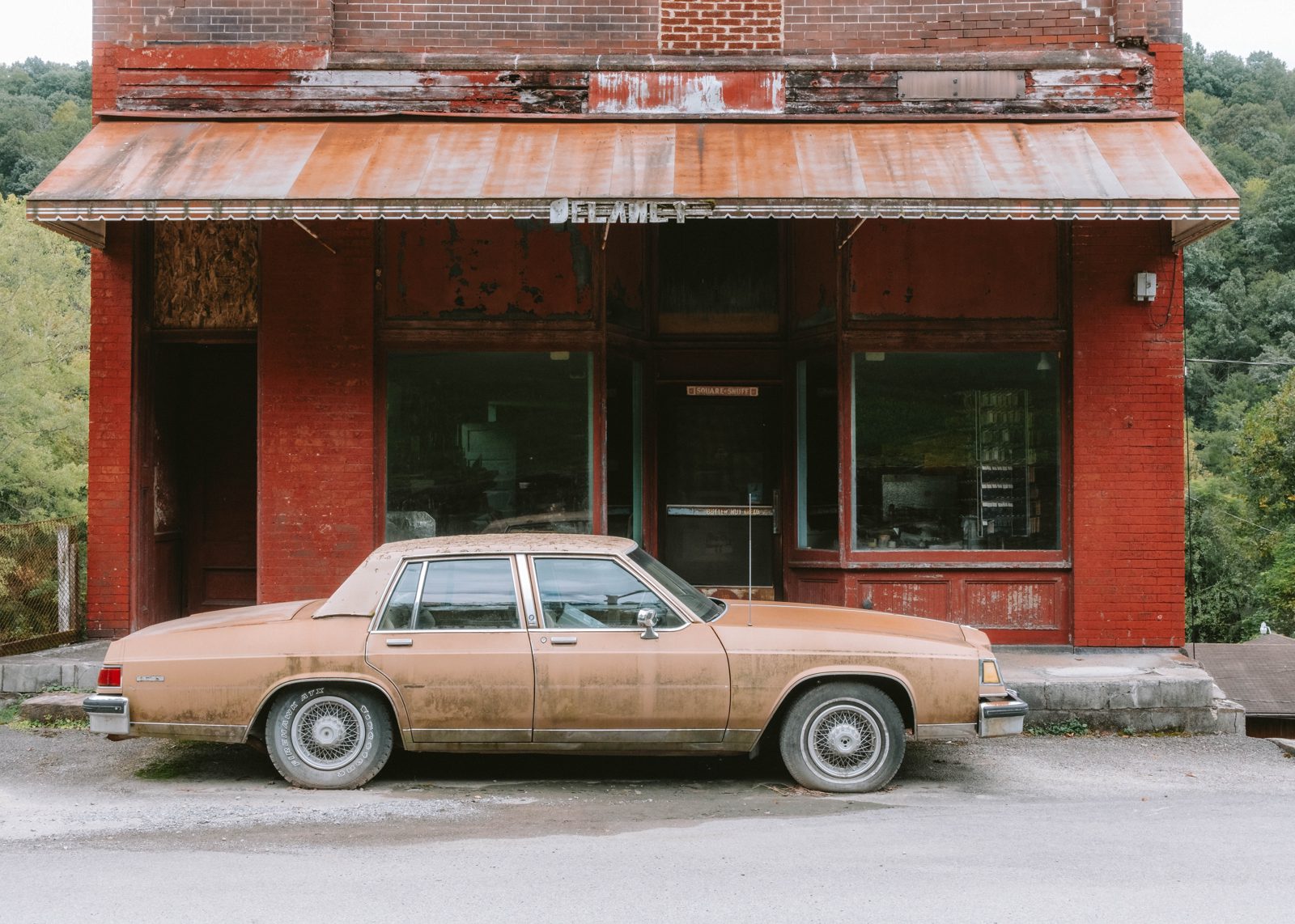
James Stobie, known on YouTube as Stobe the Hobo, was the poet laureate of the modern freight-train rider. For a few short years in the 2010s, he crisscrossed the country on railcars with a camcorder, documenting the decline of an uncool lifestyle. Much of it was misery: too cold, hot, wet, boring. He was blitzed through every waking moment: the rarest wise drunk. He died in an accident in 2017, ironically the victim of a fast-moving Amtrak train. Caught the westbound, as riders say.
Stobe spent a lot of time in small towns in bad decline, which, in the interior United States, is most of them. Sometimes he was trapped in a place like Brownsville, TX, or La Junta, CO, by a dead-end freight train, but more often he was walking around some deserted main street in the middle of the night with a malt-liquor buzz. Just to get a feel. And, between glaring locals and unhappy cops, the feeling in these depopulated cores was usually bad. The state of things here, according to Stobe, was terminal. Small-town mythology by the mid-2010s was a politically expedient lie.
“All those new faux-country songs talking about Saturday night at the bar in the small town [are] ridiculous because there’s nothing going on here at all,” he told his viewers from Sheridan, WY. “There’s nothing. Where’s the good old boys? Where’s the rowdiness? [Just] a nonstop supply of monster pickup trucks going past.”
“I think it’s all contrived nonsense,” he said.
In the summer of 2016, Stobe, accompanied by his Kolonel’s Freight Crew (KFC, as it’s often tagged) partner, Wingman, stopped off in the town of Grafton, WV, on a train-hopping journey that took him from Colorado to Cumberland, MD, to New Orleans and back. Turns out Grafton, despite its small size, hosts a sizable rail yard. It also hosts a cool mountain river, and a bridge to drink and camp underneath.
You get a 12-pack, you get a river, and you get a positive view of what’s going on
This is the other side of train riding: the infinite horizon of no responsibilities. “Stop complicating your life so much,” Stobe said, barefoot and surrounded by empty Milwaukee’s Best cans under a highway bridge in Grafton, WV. “You get a 12-pack, you get a river, and you get a positive view of what’s going on.”
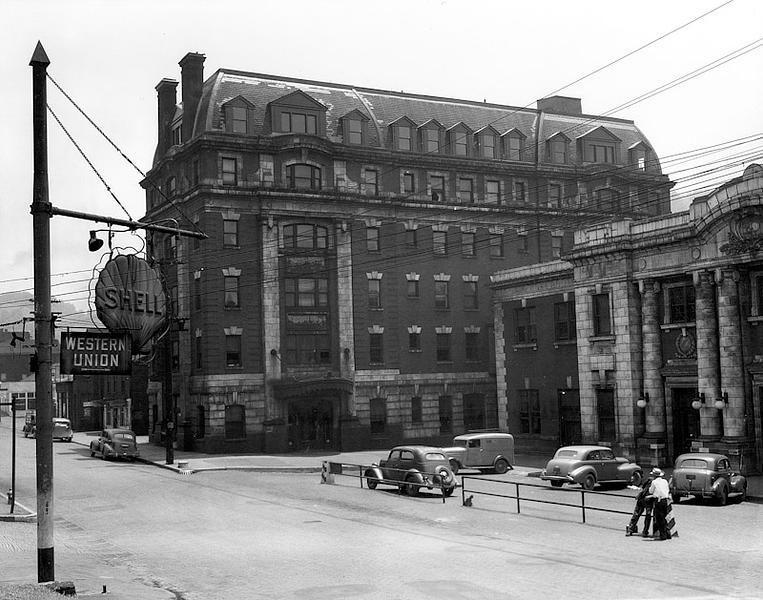
Modern Grafton history begins with the completion of the trans-Appalachian portion of the B&O Railroad’s main line from Baltimore to Wheeling, WV (then VA) in 1852. It’s always been a railroad town, one of the first. This is where trains from the coal mines and timber tracts in the south met the main line that then connected to the Eastern Seaboard and the Midwest via the Ohio River. It was, in the words of one Grafton historian, briefly the “first stop on the Western frontier.”
Towering over downtown Grafton is the seven-story Willard Hotel, an imposing block of brick and granite adjoining the B&O railroad station. Both are now vacant. The Willard was said to have one of the finest ballrooms in the area. The building opened in 1912, serving a railway line that would see upwards of 30 trains per day steaming to destinations like St. Louis, Cincinnati, and Washington, DC.
Peak Grafton lasted about 50 years, from the opening of the Willard to its closure to the public in the early 1960s. The rise and fall of a railroad town naturally tracks the rise and fall of its railroad, and the B&O, like all railways in the United States, had been in steady decline from its 1920s heights. After its public closure, the hotel became railway employee housing. It shuttered altogether in 1988, when CSX, the successor to the B&O, consolidated its operations in Jacksonville, FL. The station stayed open until the last passenger trains ran on the line in 1971.
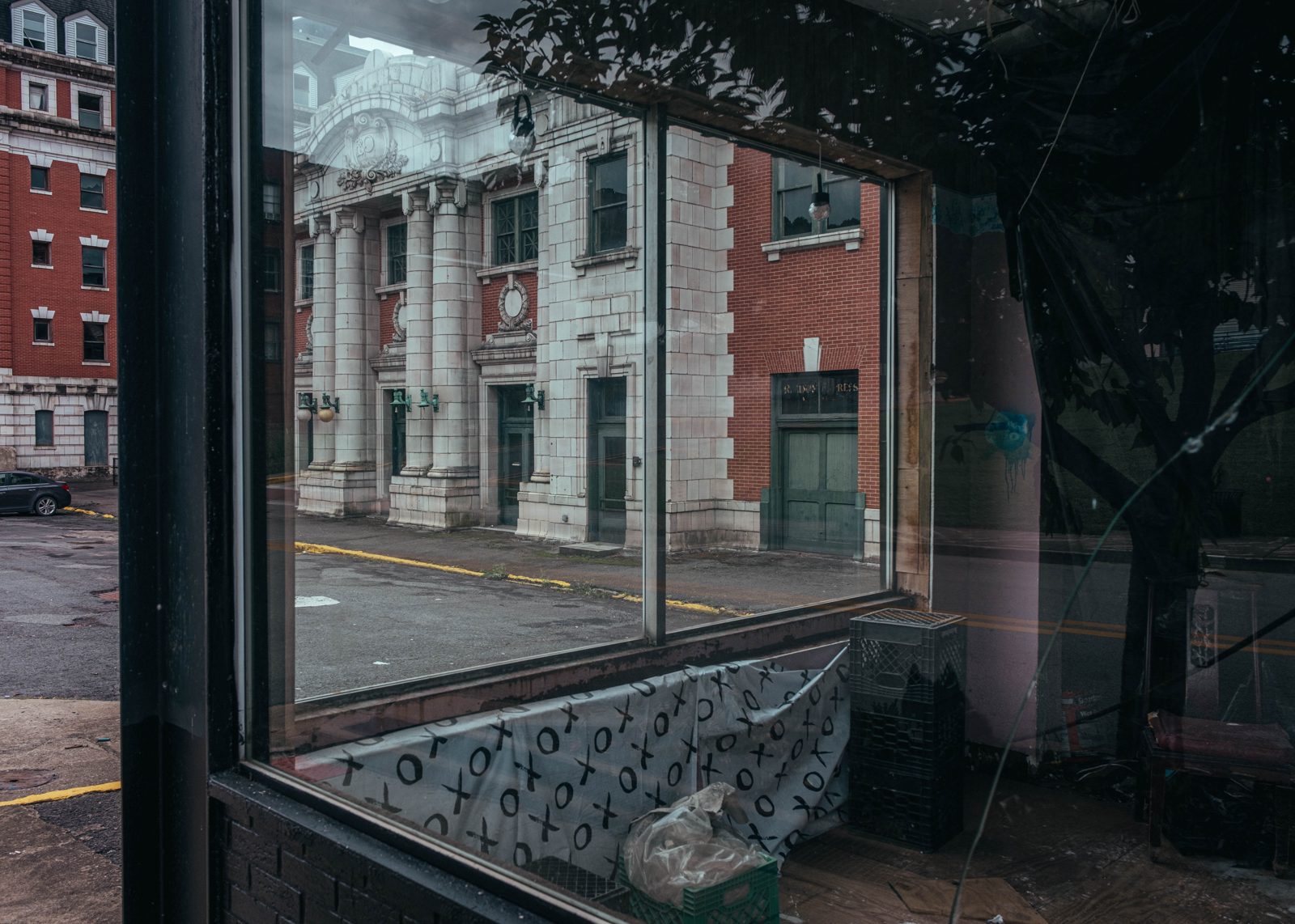
This is the depressed, post-boom Grafton that Stobe saw. It’s “the darkest hours of the night,” and the town is feeling more oppressive than liberating. Dark, empty storefronts. Trump merch. That nasty Mid-Atlantic haze draped over everything, giving the streetlights halos. It’s implied that the locals are less than kind. There have been “hassles.” He puzzles over the hulking Willard, ominous and empty.
“What you’re seeing here is the general tendency of all these smaller, kind of rustic, historic towns,” Stobe says. “[There is] interesting old historic architecture, but this is done. There’s nothing going on here anymore, you know? And while certain guys and politicians may think they’re going to bring this back—bring back the blue collar—I mean, this is done. This town is history.” With freight rail traffic in Grafton at a trickle by 2016, the pair will be forced to hitchhike out in the morning.
Honestly, Stobe’s YouTube video of the trip features less than 10 minutes of Grafton content. This isn’t sacred ground. It’s just a place a minor internet celebrity visited and, ultimately, had a bad time in. In any case, I thought I should go there.
I went to Grafton in the daytime in mid-September, arriving by automobile instead of a cargo train. I didn’t swim in the river or sleep under the bridge. I did not drink too much malt beverage, or any at all. The locals were nice, and, as I walked around peering into abandoned shops and apartment buildings, there were no hassles.
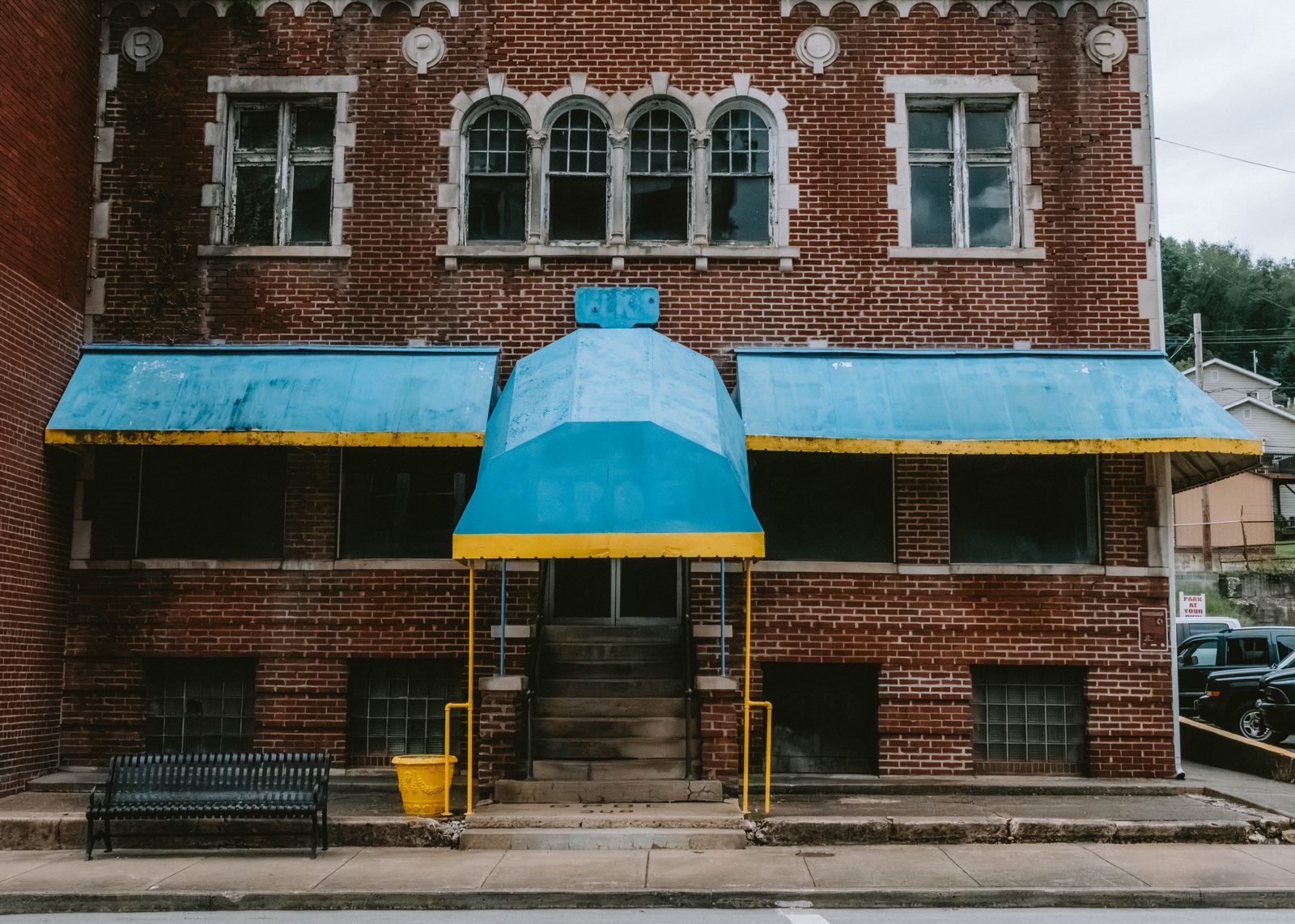
Stobe is right about Grafton though. This was a town of industry. It had density. Now, in the year 2026, it’s full of dark, padlocked caves. People spent barely more than a century in this place. A heartbeat. A banner at one end of downtown advertises a pre-trial diversion center.
One storefront with a rusted-over metal door features three armchairs in its windows. Dead spotlights hang above them and gold curtains backdrop the scene. Two chairs are stripped to bare wood and springs. They’re left to just sit there like that in full view of downtown Grafton. It’s a bit obscene. Mocking, even.
Most of the occupied real estate downtown is government. There’s the pre-trial diversion building, a sheriff’s office, courthouse, planning commission, a city-run arts center. Then there’s a diner, a junk shop, cupcake shop, a pool hall. It’s not that empty, which is kind of what makes it so vexing. People are out and about. A cherrypicker works on a streetlight; a storefront gets a new coat of paint.
So, what happens here, ultimately? It’s been a generation since CSX vacated the Willard, but coal trains still shuffle around the yard behind it. Grafton isn’t a ghost town; it’s more like ghost mixed-use. Not much more you can say about it really.
A hundred years ago people built this town like a fortress fit for a thousand-year reign. They had no question. But it didn’t shake out like that.
nothing yet.
reply on bluesky