Just Seven More Miles

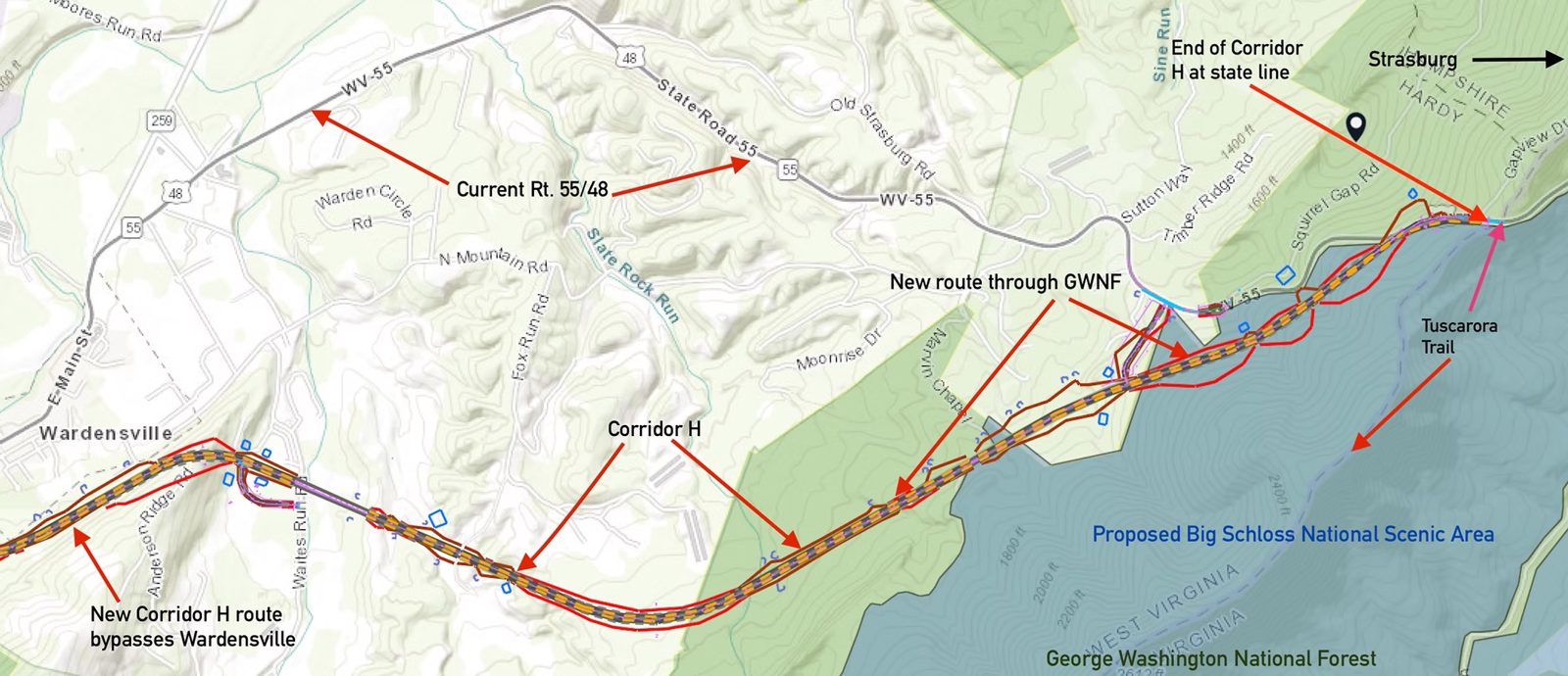
Following an April lawsuit, a pair of environmental groups sought a preliminary injunction this week in federal court that would shut down construction of the terminal 6.9-mile segment of the Corridor H expressway. This is the famed “highway to nowhere” segment, where West Virginia’s billions-of-dollars-in-the-making asphalt dream runs into the reality that the only thing it will connect to for a generation is a two-lane, moderately traveled country road at the top of a mountain.
That mountaintop is the border between Virginia and West Virginia. Corridor H was originally conceived to span both states, with a final 14-mile segment in Virginia linking Corridor H to Interstate 81 and nearby Virginia Inland Port.
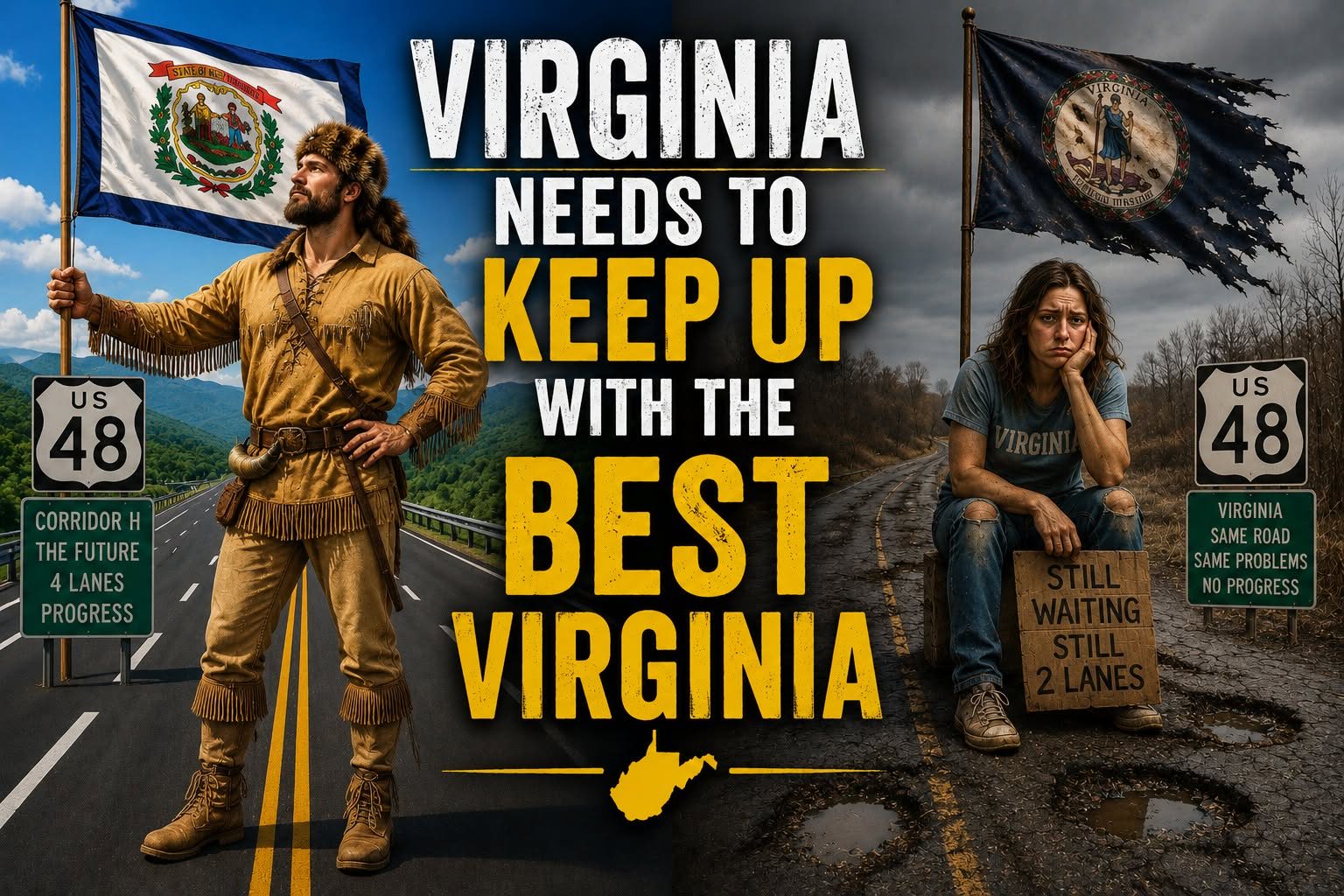
The state of Virginia, however, officially left the Corridor H project in 1996, finding little benefit to blasting its own extremely expensive section of vacant highway into a mountain. In a report last year, Virginia planners found that even if Corridor H traffic beats the expectations of West Virginia’s own planners twice over, two lanes are still fine, at least until 2102. This reticence by Virginia has made certain online West Virginians absolutely crazy. It’s the sunk cost fallacy at fever pitch.
There’s a mania to it:
Costs sunk so far have totaled around $2.2 billion. While that’s mostly in the past 25 years—not the 60 year horizon of the entire 23-highway Appalachian Development Highway System—spiking inflation, especially in the construction industry, means that $2.2 billion in past dollars is more like $4.5 billion in 2026 dollars. (This is based on taking a weighted midpoint average of the Federal Highway Administration’s National Highway Construction Cost Index, where the weight falls on 2012. That’s a very rough midpoint in Corridor H construction activity.)
That’s a lot of money in a state where nearly a quarter of children live below the poverty line. To date, construction costs work out to be around $35 million per mile (around half the national average for comparable highways, for what it’s worth), a figure that’s expected to almost triple for the final 6.7-mile segment from Wardensville to the Virginia state line. This section, roughly as long as a moderate day hike, carries a price tag of $542 million, or $81 million per mile.
There’s a lot to unpack in the lawsuit and this week’s motion for injunction, but the basic outline is that the West Virginia Department of Transportation (WVDOT) and the Federal Highway Administration (FHWA) are acting shady. Environmental groups have been fighting Corridor H for a long time, and in 1996, one of them, Corridor H Alternatives (CHA), filed a lawsuit against the Secretary of Transportation seeking to stop the megaproject. It succeeded. Instead of fighting the decision, the Secretary and CHA reached a settlement.
Part of that agreement put rules on the Wardensville-to-Virginia segment. It could only be built if one of four conditions were met: Virginia builds its section of Corridor H; traffic increases to a level that demands highway expansion; funding threatens to fall through; or 20 years passes. The first three didn’t happen, leaving the state and feds to wait out the fourth condition, which they did.
That should have put the state in the clear to build the segment, but the groups behind the current lawsuit argue that West Virginia misrepresented some crucial details. Chiefly, the state said it studied a build alternative that it didn’t. This is the “spot improvement” alternative, which would make a bunch of road-geometry improvements to the existing highway rather than spend half a billion dollars on an expressway. This is essentially what Virginia has opted to do.
The current motion points out that spot improvements are sufficient because, despite 100 miles of fresh superhighway, traffic on Corridor H hasn’t actually increased as predicted by a 1996 Environmental Impact Statement and the subsequent Record of Decision approving the Wardensville-to-Virginia segment. “[P]rojections of increased traffic in the 1996 FEIS and the 2003 Amended ROD have proven to be demonstrably false,” the motion states.
Notably, it was the Trump administration that brought the Wardensville-to-Virginia expressway plan back from 20 years of dormancy. Sean Duffy is the official named in the lawsuit. So maybe some shadiness, or at least sloppiness, is to be expected.
In any case, West Virginia is threatening to start construction work this month. The contracts are signed. It’s just a question of whether the court will intervene before ground is broken. (All was quiet on a recent weekend.)
-- michael byrne
nothing yet.
reply on bluesky