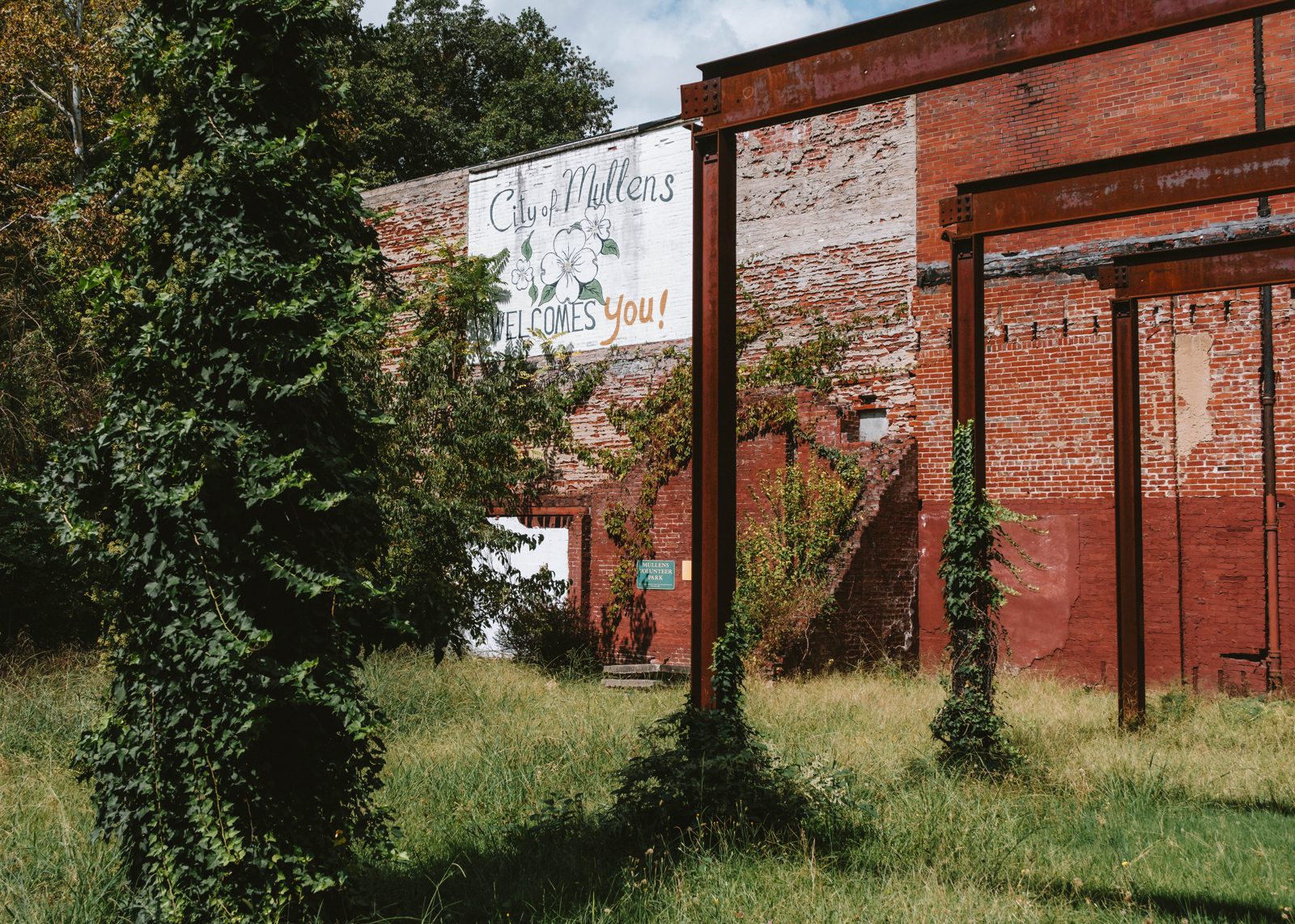
Empty expressways are one symptom of the civic mental illness that governs West Virginia. To a traveler, they may be the most obvious. Mountaintops shredded by mining are mostly behind tall fences; nearby towns depopulated by disinvestment lie along since-bypassed county roads. But the freeways that go to and come from nowhere are all over, from Corridor H to the secret four-lane bypass behind Berkeley Springs. Among the most egregious examples of the phenomenon is the Coalfields Expressway, extending north from the ghost town of Mullens.
The final stretch before the Coalfields Expressway, before it ends in an abrupt dogleg halfway down a steep mountainside, feels like a portal into hell. Here, find a twisting, claustrophobic rock-cut to rival Maryland’s prized Sideling Hill. The difference, of course, is that Sideling Hill hosts Interstate 68, while this nameless canyon protects a road to nowhere. To a line of reflective red diamonds and dense forest beyond.
At the dogleg, the expressway narrows to two lanes and quickly descends into a tight valley cut by the Guyandotte River and Slab Fork Creek. At the convergence of the two waterways, alongside a now-quiet Norfolk Southern rail line, find Mullens.
The Coalfields Expressway generally bisects what’s known as the Winding Gulf Coalfield, an expanse of high-value, largely tapped-out “smokeless” coal extending along its namesake waterway in far southern West Virginia. Though the coalfield supported around 50 coal towns at its peak, Mullens was the region’s industrial anchor.
As with Grafton far to the north, Mullens’ status had everything to do with the railroad (and, of course, the railroad with coal). In 1909, the Virginian Railway was established with the soon-to-be-incorporated town as one of its key hubs. Built to be an end-run around the major railroads, the Virginian offered a straight shot from the coalfields of southern West Virginia to the Virginia port of Hampton Roads. A large section of the railway was electrified from Mullens to Roanoke, VA.
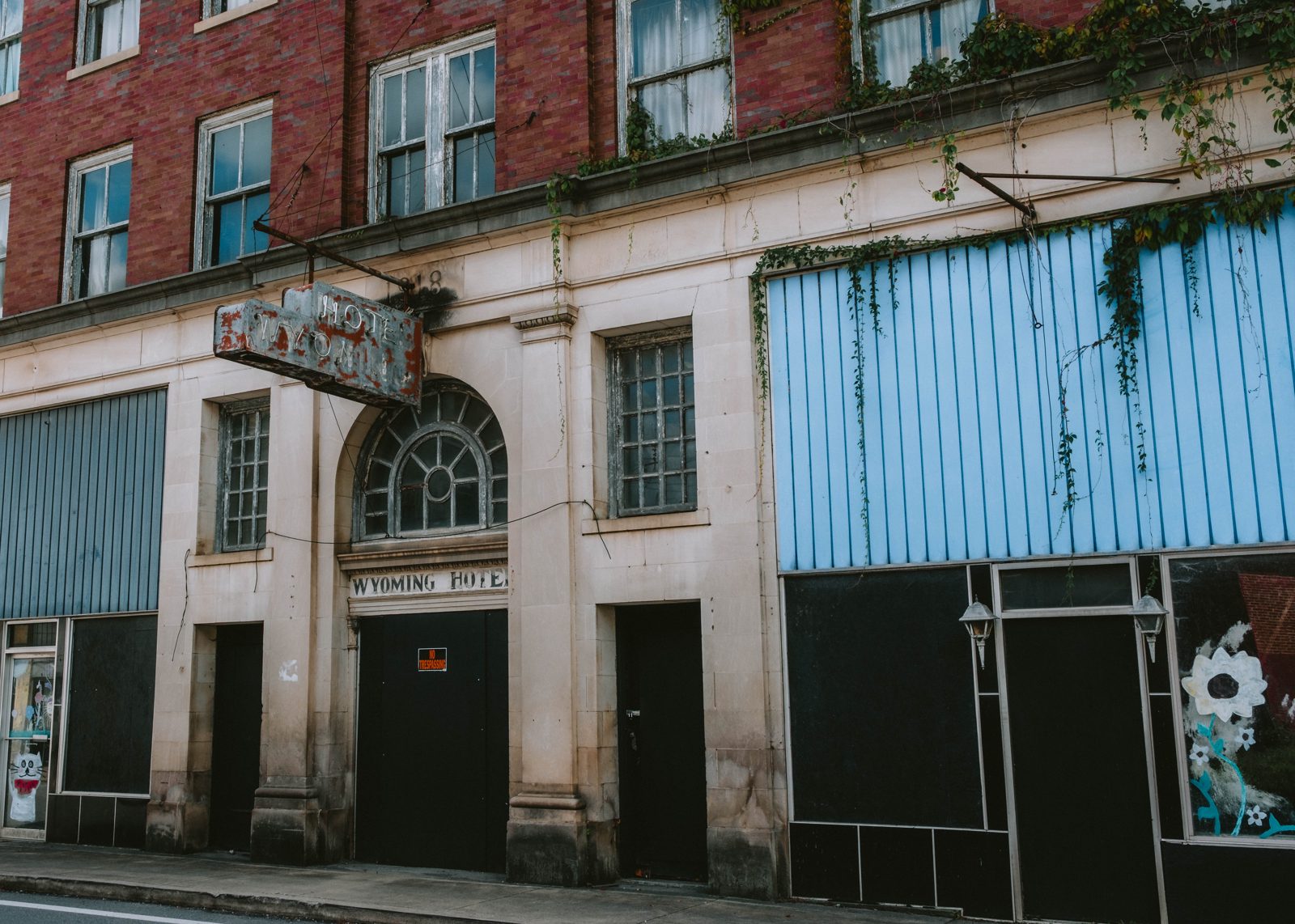
Hundreds of workers were employed in Mullens by the Virginian Railroad. The town hosted an engine repair shop and large classification yard on its outskirts. In 1919, the five-story Wyoming Hotel opened in downtown Mullens. A year later, it burned down with the rest of the town, only to be immediately reconstructed following a new brick-and-stone building ordinance. Another town meant to last.
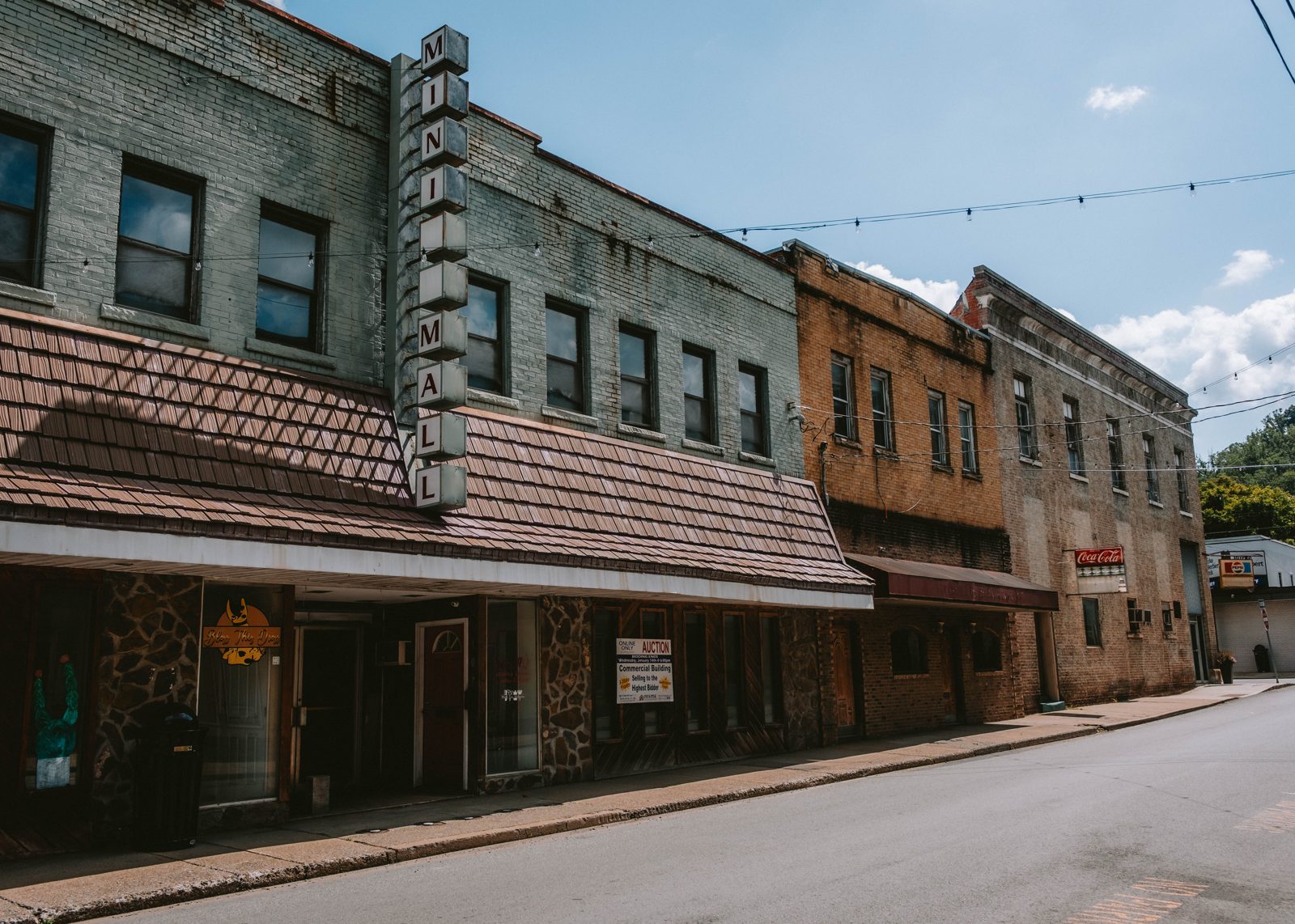
Good times in Mullens were intermittent. It was leveled by fire three times between 1917 and 1920. Coal demand cratered during the Great Depression, only to boom during World War 2 and the 1950s. Industrial automation in the 1960s sank the coal industry’s workforce in the 1960s. The town’s population peaked in 1960 at 3,544 and has since fallen to around 1,400. From the 1950s on, as local employers continued to shutter, it was a gradual decline mirroring what was happening in most of West Virginia. Between 1980 and 2005, Wyoming County, home to Mullens, went from 8,000 coal industry jobs to 3,000.
Then, in 2001, came the flood.
Stuffed into a narrow valley next to a river, Mullens had been hit by flooding many times before. But, in July of 2001, 11 inches of rain fell in a four-hour period. It was enough to raise the Guyandotte River and inundate downtown Mullens under seven feet of muddy sludge and debris. From a 2005 NPR report:
Water poured down the mountains and quickly flooded the creeks and rivers that wind through the valleys. Houses and trailers were ripped from their foundations and swept away. They jammed up under bridges so the water had nowhere to go, and that made the flooding even worse.
“Where we have such severe, steep mountains coming down into a narrow valley, when that amount of water, that 11 inches of rain in four hours, it just acts like a funnel and it just pours it right down into the valley, gathering speed and strength as it goes,” Mullens resident Charlie Feller told NPR. “Here in my–in the downtown section where my business is, it looked like a war zone, with just windows all broken out. It was just hard to believe. It’s hard to describe to people the devastation.”
FEMA moved in quickly, demolishing some damaged properties—including a pair of ancient and sadly abandoned theaters—and setting up a trailer park for displaced residents. There was an immediate exodus from the town, but a core group of civic-minded business owners decided to stay and make a go of rebuilding, aided by a swell of low- and no-cost government funding.
That’s the thrust of the NPR piece (which aired following the Katrina disaster): rebuilding after a flood. It’s meant to be a hopeful (if melancholy) lesson in can-do-ism. In 2005, the Mullens resurgence included a pair of flower shops, restaurants, a tavern, a pair of barbershops, a doctor’s office. Not bad for a very compact space.
To be sure, some of that remains: a barbershop, a couple of restaurants, a pharmacy. But Mullens is otherwise cored. And, again, we’re left with what happens here now?
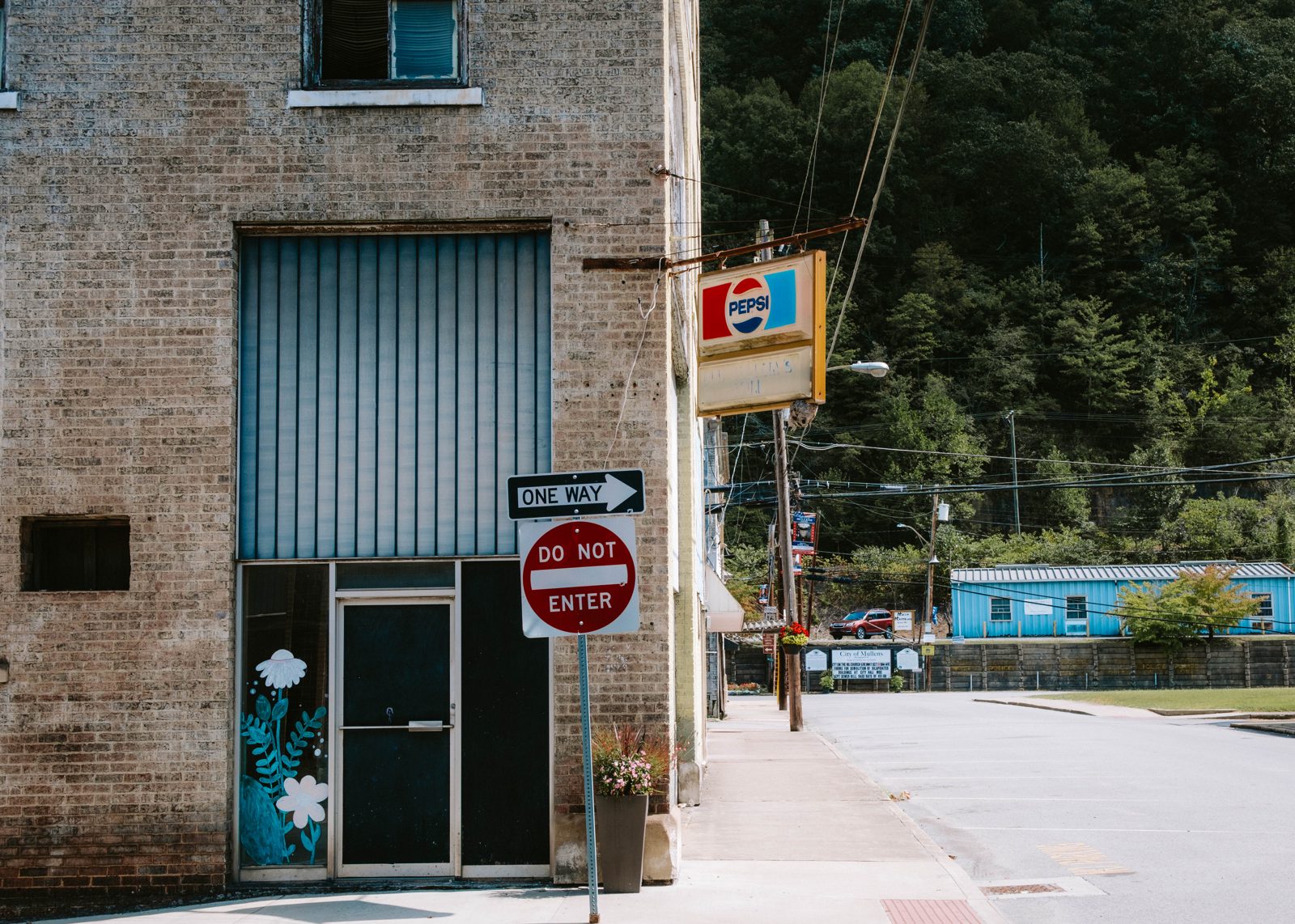
West Virginia taxes its residents to build freeways that no one will drive on. If only we could superimpose the Interstate matrix of Los Angeles onto the mountains of West Virginia. Then, maybe then, something good? Something new?
I’ve read a lot about the expressways of West Virginia and it’s never quite clear what the big idea is. To make it easier to get to and from places no one has a reason to live in anymore? A freeway isn’t a reason to make your home someplace, at least not here. This isn’t Gaithersburg. Or is the goal to make it easier for long-distance travelers to traverse a rugged state? You hear both and neither of them make much sense if the point is to revitalize a state full of towns like Mullens and Grafton.
Then again, neither do data centers, which employ no one, and, in West Virginia serve as a tax revenue stream largely dedicated to reducing the state income tax rate and propping up coal and gas power plants. Which also don’t really employ people. So you have empty expressways connecting empty data centers powered by coal plants that are also basically empty. It’s maddening.
The future of Mullens, according to politicians, is in processing coal waste into carbon products. A new AmeriCarbon plant here is poised to lead an “economic boom,” in fact, according to a press release from Shelly Moore Capito, the West Virginia Senator who is not known for being profane with her dog’s rear-end. The state spent around $2 million in local improvements to woo the industry, and, in return, AmeriCarbon will employ around 70 people at the new facility.
nothing yet.
reply on bluesky